Rural Grocery Spotlight: Salt Creek Market (Eureka, KS)
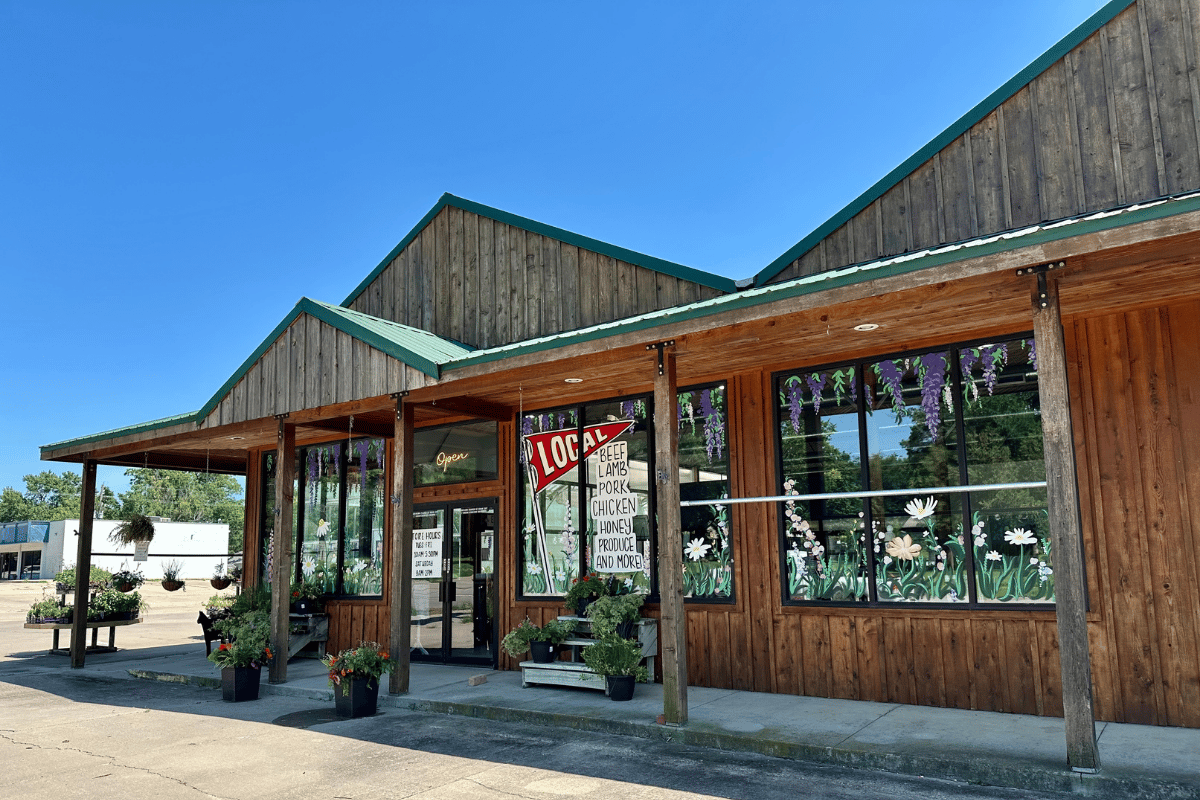
Sara and Jay Shivers own and operate Salt Creek Farm south of Eureka, Kansas (pop. 2,223). In addition to raising cattle, they also own and operate Salt Creek Market in Eureka, a rural grocery store where they have been selling their own products as well as other locally-sourced goods since November 2022. They have been in their current 5,000 square foot location since 2025. Read highlights below from our conversation with Sara (which has been edited for length) after we visited the store.
Can you tell us about your store's history?
In 2014, my husband and I were living in North Texas and being there, we could see some of that local food movement starting. Ever since we got married, we'd talked about moving back to my family's ranch and selling meat directly to consumers. So that had always been something that had been in our minds and then in 2014, we had the opportunity to move back to Kansas to my family's ranch and I started ranching with my dad. When I first moved back, my dad told me we needed to find a better way to market our cattle. In his opinion, we were raising a premium product but we were not getting a premium at the sale barn when we were selling them. He fully intended for me to go network with the sale barn guys, network with the feedlot guys, and figure out how we could still do our conventional cattle system but just do it in a more efficient, effective way. I took that as starting a whole new business for direct marketing our beef to consumers. So in 2017, we started selling directly to consumers and it didn't take off initially as quickly as we had hoped. But then I had a cousin in Kansas City who was opening up a brewery and he wanted to use our family's beef in his brewery on the menu for burgers. So that really opened the door for us to start wholesaling our beef to restaurants. Over the next couple of years, we were supplying beef to restaurants in Kansas City and Wichita and that was our main program for our beef. We were still selling a little bit of retail beef (we had an online store already built out) but like 95% of our sales were to wholesale customers and restaurants. Then COVID hit. In March of 2020, all of the restaurants started shutting down for what they thought was just going to be two weeks. All of our wholesale orders got put on hold but we still had all the locker spots and we still had all this beef available. But on the flip side, demand for beef started going up on a retail level because grocery stores were seeing a shortage of beef. People were starting to look more towards buying directly from ranchers. So since we already had our system in place, we already had our website set up and we saw a huge increase in our retail sales. I remember in April of 2020, I had picked up a beef from the locker, I inventoried it, I put it online, updated our inventory on our website, and I sent out an email and a Facebook post to announce that we have beef available. We sold out of a whole beef in 13 minutes. That's the first and only time I'm sure that will ever happen. But that just also shows the demand that was already there.
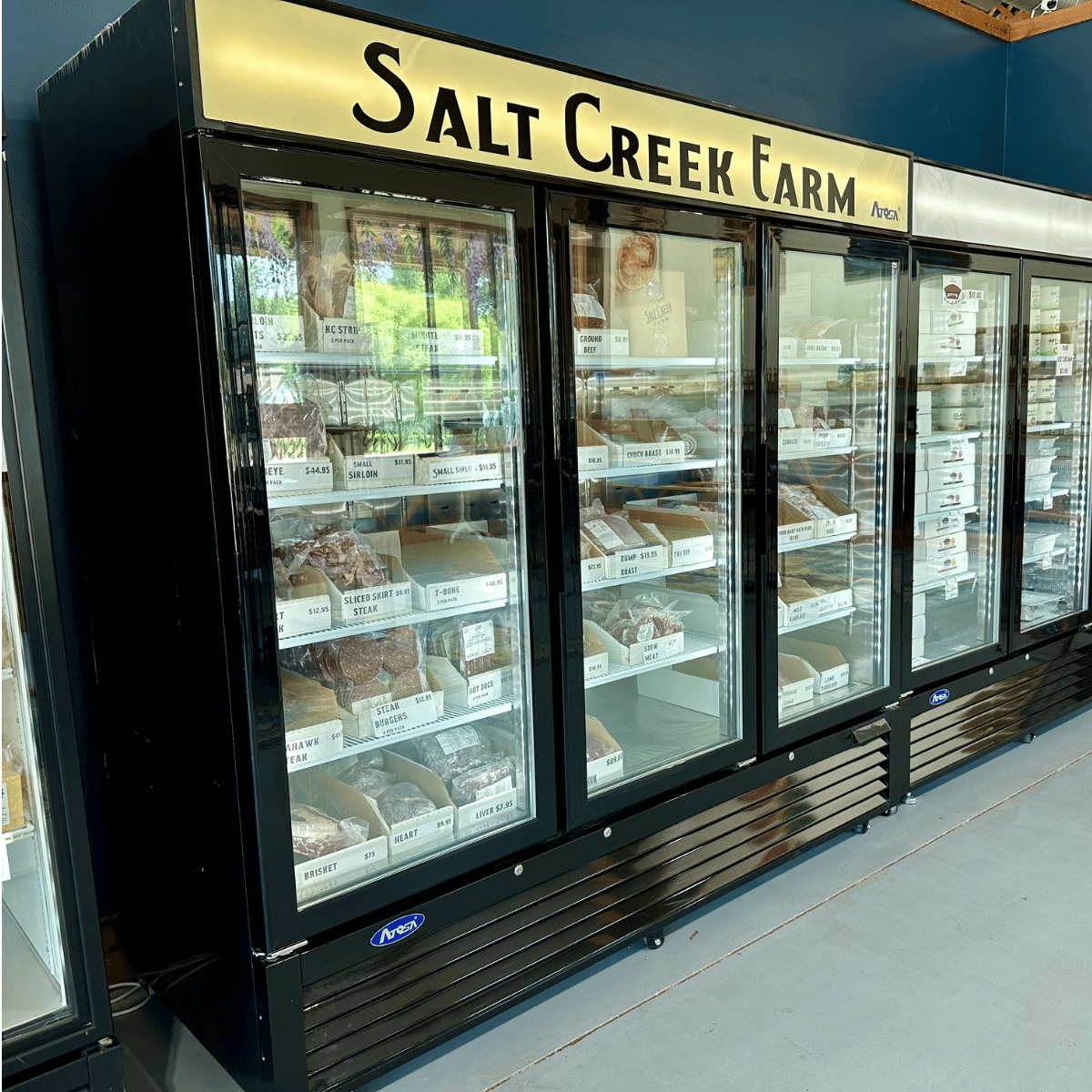
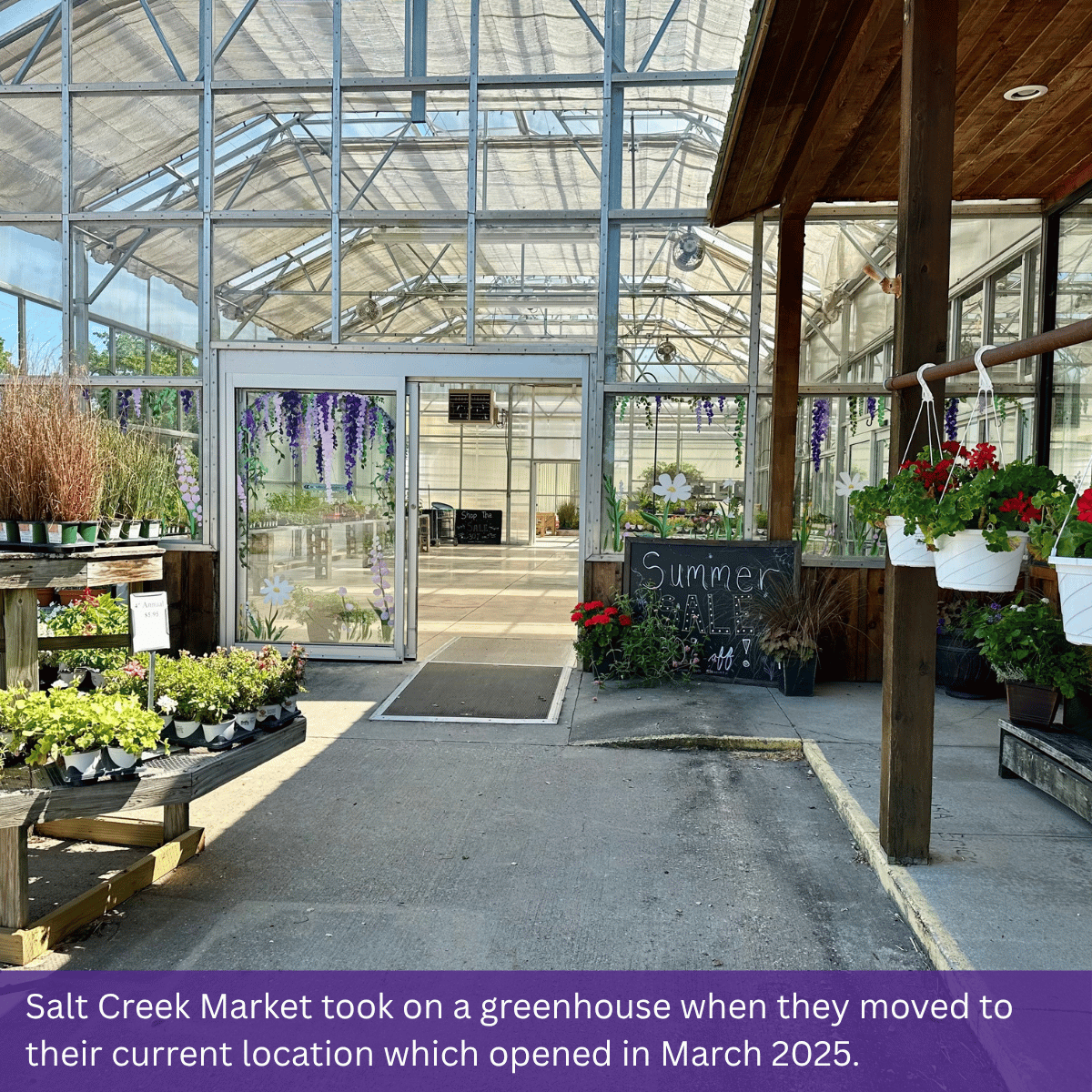
Our retail sales continued to grow. We were shipping nationwide and then later that summer and fall, our restaurant sales came back as well, so we were able to exponentially grow in 2020 with our retail sales. Then in the fall of 2022, there was a really small space on our main street in Eureka that came up for rent. Initially, I called my friend, who also sells quarters and halves locally, because she told me she'd always wanted a store. My friend said: "No, it's just not the right time for us." I sat thinking on it for a while and talked to my husband about it and we agreed to do a trial run in the store. We talked to the landlord and she gave us a 3-month lease for October, November, and December of 2022 to gauge the interest and see if we were going to get enough customers to make this worth our while. So in November of 2022, we opened up our first store in Eureka, which was Salt Creek Market. We were blown away by the community response. Some people can't afford or don't have the space to buy our beef by the quarter or the half so being able to buy it by the cut was fantastic. We also specialized in buying other local Kansas products, so we had local ice cream and cheeses and cookies and crackers and jams and things like that. We quickly realized within probably 6 to 12 months that we were going to need a bigger space and so it took us about another year. We were asking around and we were looking at buildings. Then the woman who owned the local greenhouse and garden center called me and told me she wanted to retire and asked if we would be interested in her building. It was another one of those situations where we never planned on owning a garden center. It wasn't part of the business plan. But it was an opportunity that we were open to, and an opportunity that we were willing to take when it presented itself. So we moved into our new building, which is on Highway 54 in Eureka, and we opened in March of 2025. That has allowed us to grow our business again exponentially. We tripled the size of market floor space we had for selling products. We were able to add a commercial kitchen in so now we are able to make take-and-bake meals that use our beef and our products still.
Tell us about the role your store plays in the local community.
When we had the opportunity to buy the garden center and the greenhouse, that was also a service that I didn't want our community to lose because it's a place where people can come buy local flowers, herbs, and veggie starts. It's a really important service in the community for them to be able to buy good plants locally and not have to drive out of town. But people really love having that local market too. We have lots of people who come in on a very regular basis. They trust our beef. We also work with local producers to provide local pork and lamb so they know what they're getting. I can tell them exactly where it's coming from, exactly where it's butchered, how it's butchered, how long it's dry aged, so they have a lot more confidence in the product they're buying. I think it really has become a nice cornerstone business in our community. We're able to provide healthy local food products as well as provide employment for some local people and give back to our community when we can sponsor activities.
What is your store most known for in the community?
It's a local business from a local family with local products that they know are high quality and they can trust.
Is there a specific product your customers rave about?
I think our beef is what we're best known for just because that's what we raise on our ranch and that's what the business started from. But we use that beef in lots of other products, so we use that beef in our take-and-bake meals. Then when we get our summer sausage made for the charcuterie bundles, we use our beef for that summer sausage. I've had multiple people tell me when they try our beef for the first time that they didn't know beef could taste like this. They're just not used to having a beef that's the whole beef's been dry aged for 14 days and it's a high-quality beef. So, it's helping them find a better tasting option and then we use it throughout products in our store so it kind of has a long-reaching effect.
Can you talk about how you work with other local farmers and producers?
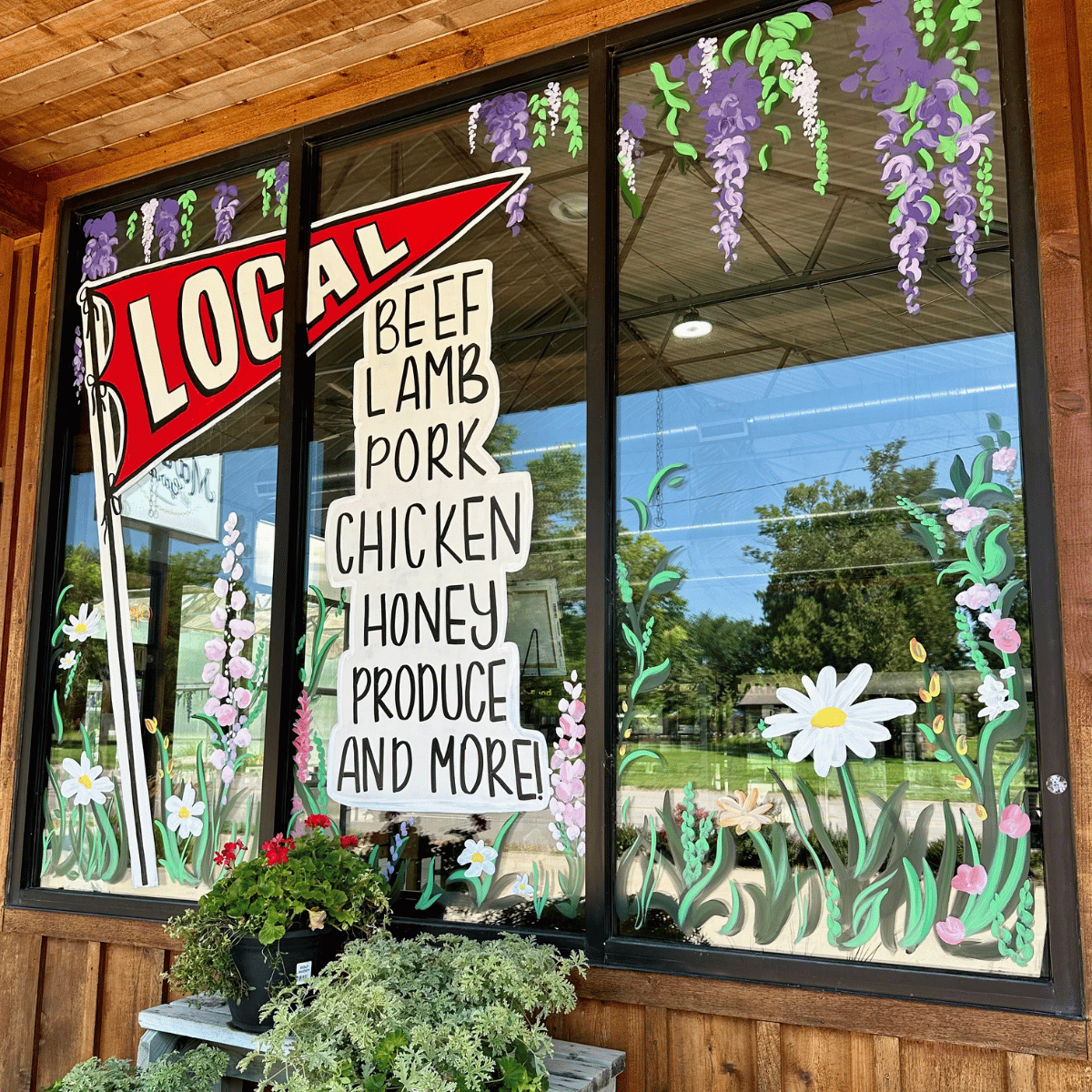
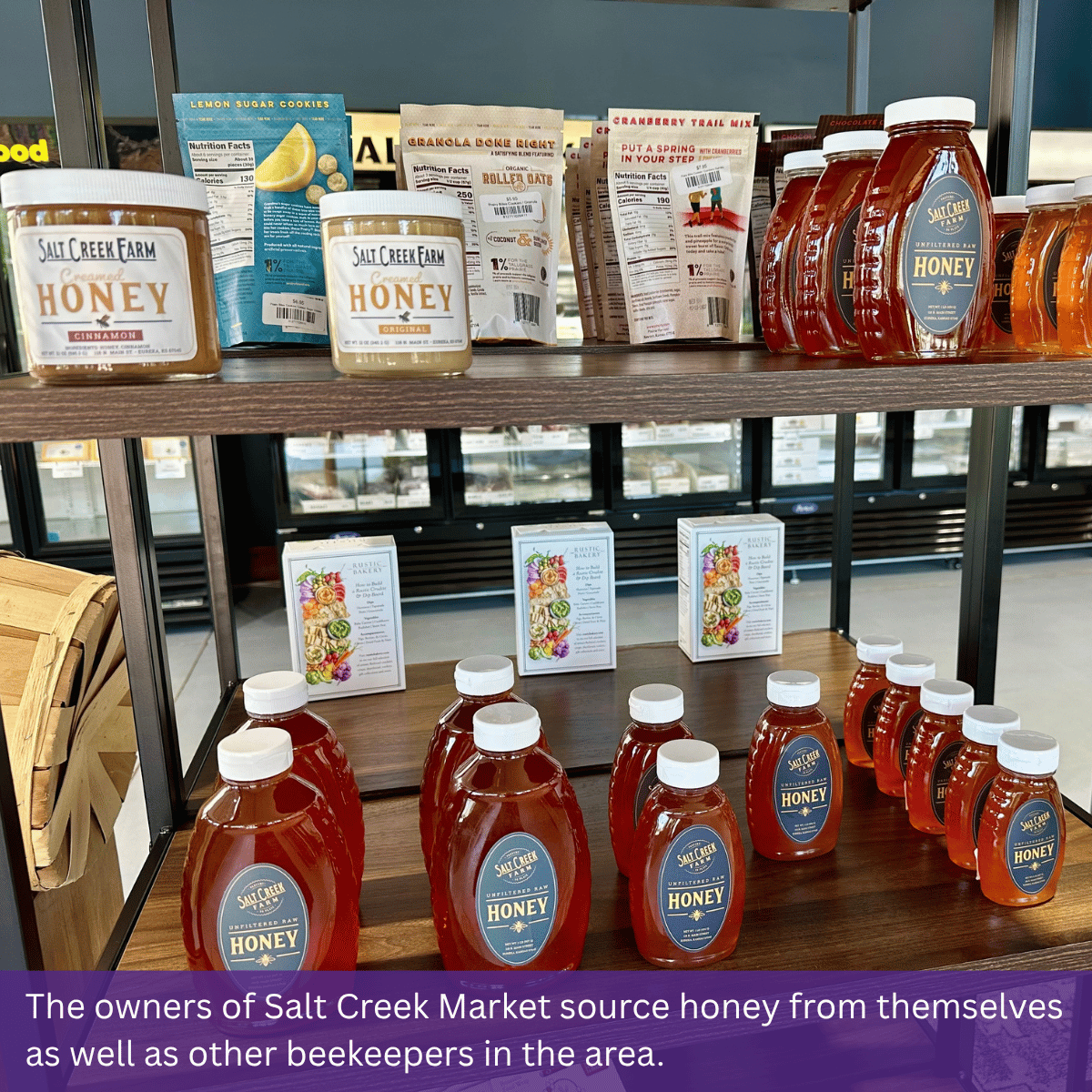
My husband does most of our honey but we also work with other beekeepers and buy some of their bulk honey. We work with a producer from Hamilton who grows all of our lamb. We work with a producer from Neodesha who grows all of our pork. Our cheese comes from Durham, Kansas. Our ice cream comes from North Newport. Our pies come from Waverly, Kansas. We've got products from Louisburg Cider Mill. While not all of our products are Kansas-made, a vast majority of our products are Kansas-produced. That was something that was important to me because I want to support other local Kansas producers and help them succeed and thrive and have an outlet for their products. Recently this summer, I had a local farmer call and say: "I've got 11 acres of sweet corn. Is that something that you would be interested in selling?" I was like: "Yes, absolutely." We've sold over 500 ears of corn in the last month. That's something that I enjoy: making those connections with farmers who may not have an easy outlet for their product but they have a passion for growing it.
Can you talk about the biggest challenges that your store faces on a day-to-day basis?
One is labor because I think that's evident in any business, but specifically small-town business. Having consistent labor that you can depend on. Because of our ranch and our kids, we are not able to be there all day, every day, so we depend on employees to help us run that business. Right now we've got some great employees, but there's been times where we've really struggled to make sure we can stay open because we've had employee turnover. I know a lot of small-town businesses struggle with the labor issue. The cost of insurance is also a hard issue, because we have to carry so much insurance for all the different services and products that we supply and sell, and building insurance, vehicle insurance, business insurance, product insurance, and recall insurance. Insurance is a huge chunk of our expenses to be able to offer this business. And then just also the cost of doing business as far as utilities. That is a huge building that you were in. It's 5,000 square feet. It costs us $1,000 a month to air condition that building in the summer. That's something that sometimes I think people don't see, is all the underlying costs that go with running a business. There's a lot of little expenses that can add up really quick.
What advice would you give to others who might be just starting out with a store and locally sourced products?
Just start. The hardest part is starting. You can plan all day long, and planning is important, but you've got to start somewhere. Put one foot in front of the other and get started. Try to build a customer email list so you can contact them directly, with or without social media that may or may not always be there. Use social media to your advantage. It's a great tool, but make sure it serves your business purpose. Is your time really being used wisely to serve the purpose of your business? Just network as much as possible, because you never know what opportunity might be there. That's one thing that's really served our business well: we have been open to the opportunities that have presented themselves to us. As I said, we were originally going to sell these directly to consumers and when the opportunity to start selling to restaurants came up, we took it, and then we had the opportunity to open a store. Well, that was never in the business plan, but we went ahead and took it. Then we had the opportunity to add the garden center to our business plan, and we took it. So, I think that would be the biggest thing: don't lock yourself in too much. Be able to see opportunities and seize them when it makes sense.
In your opinion, are there any key changes, either at the local, state, or federal level that are needed to help make stores like yours more sustainable and successful in the long term?
There have been some amazing grants that have helped us along the way. We were able to get our delivery van in 2020 so we have a refrigerated delivery van that we use to go pick up meat so we transport it safely. When we deliver to restaurants, we use that to transport meat to restaurants and to customers so everything stays safely cooled. We were able to buy our van mostly with a grant from the state level during COVID. If we would have had to pay for that out of pocket, we may not have done it and we may not have been able to continue to grow our business. So I think those state and federal grants that have been available to some of these small local food businesses are really key in helping them grow. If you want to grow a business, you've got to kind of give them a step up. Food business margins are tight and, a lot of the time, farmers and ranchers aren't paying themselves as much as they would if they went and got a town job and were getting a salary every week. So every little bit helps when they can try to grow their business.
Brand names appearing in this article are for product identification purposes only. No endorsement is intended, nor is criticism implied of similar products not mentioned.